In 1994, on the initiative of UNESCO and Education International (EI), World Teachers’ Day began to be celebrated globally. The 5th of October was selected as the date. The purpose of the day is to draw attention to the role of the teacher in education and upbringing, and to the appreciation of teachers all over the world. On World Teachers’ Day, the focus may be on the teacher, but at the heart of learning is always the learner. As a teacher, it is my joy and privilege to witness a learner’s insights up close and to act as a support and help in guiding the learner forward in their learning. In today’s world, and perhaps especially in higher education institutions that increasingly emphasise online and independent study, artificial intelligence is also present.
At its best, AI is an excellent assistant to support learning. AI helps to find information, structure thoughts, and speed up routine tasks. It responds immediately and tirelessly, which a teacher cannot always do. AI is good at helping you forward when you get stuck on something and never gets tired of answering the question ‘why’. It justifies, shows intermediate steps, and can even create practice exercises with solutions.
However, AI only works this way when you know how to use it sensibly and responsibly. Today, AI is so easily accessible and constantly present that the temptation to take a shortcut using it is great. Merely by copying and pasting questions and answers, AI quickly becomes a shortcut to misfortune. Especially when studying a new and unfamiliar subject, the output of AI can sound good and credible, which might lead one to trust it too naively. Relying on AI’s output without your own reflection develops neither your own competence nor your understanding, and thus no real learning takes place.
Using AI to support learning could be compared to using a calculator in mathematics. A calculator is a useful tool, but it is of little joy if the user does not understand the underlying principles of the calculations – that is, if they do not know how to use it. My own view, which I also point out to my students, is that a calculator can and should be used once you understand what it does. This same idea could be extended to the use of AI. AI does not replace thinking. On the contrary, its use requires critical thinking, fact-checking, and the asking of the right questions and prompts. One could even say that utilising AI requires a surprising amount of understanding.
Does the advent of AI then show in the teacher’s work and everyday life? My own opinion is that it shows less than one might previously have thought. With the internet, information has been available almost limitlessly long before AI came into the picture. The teacher has still been needed and will continue to be needed. The teacher defines and constructs reasonably sized modules and breaks the content down into manageable pieces for the students. The teacher does this work, if not always on an individual basis, then at least on a group basis. On the other hand, the teacher inspires and motivates the students regarding the topics by creating a meaningful context around the substance, thus helping the student build comprehensive wholes instead of disconnected lessons. AI is not capable of these tasks. Not, at least, without a teacher acting as an expert to guide the AI.
The question is therefore not whether AI is good or bad, or whether it is permissible to use AI or not. It is about how one decides to utilise AI. Used correctly, AI is an excellent assistant. Used incorrectly, it is easily a shortcut to misfortune. In the future, the most important skill may not be the use of AI itself, but using it sensibly and responsibly.
Microsoft Copilot AI has been utilised in the creation of this blog post. The thoughts and views in the text are the author’s own. AI has been used to improve the flow of the text and to adhere to comma rules. Responsibly and sensibly? That is for the reader to decide.
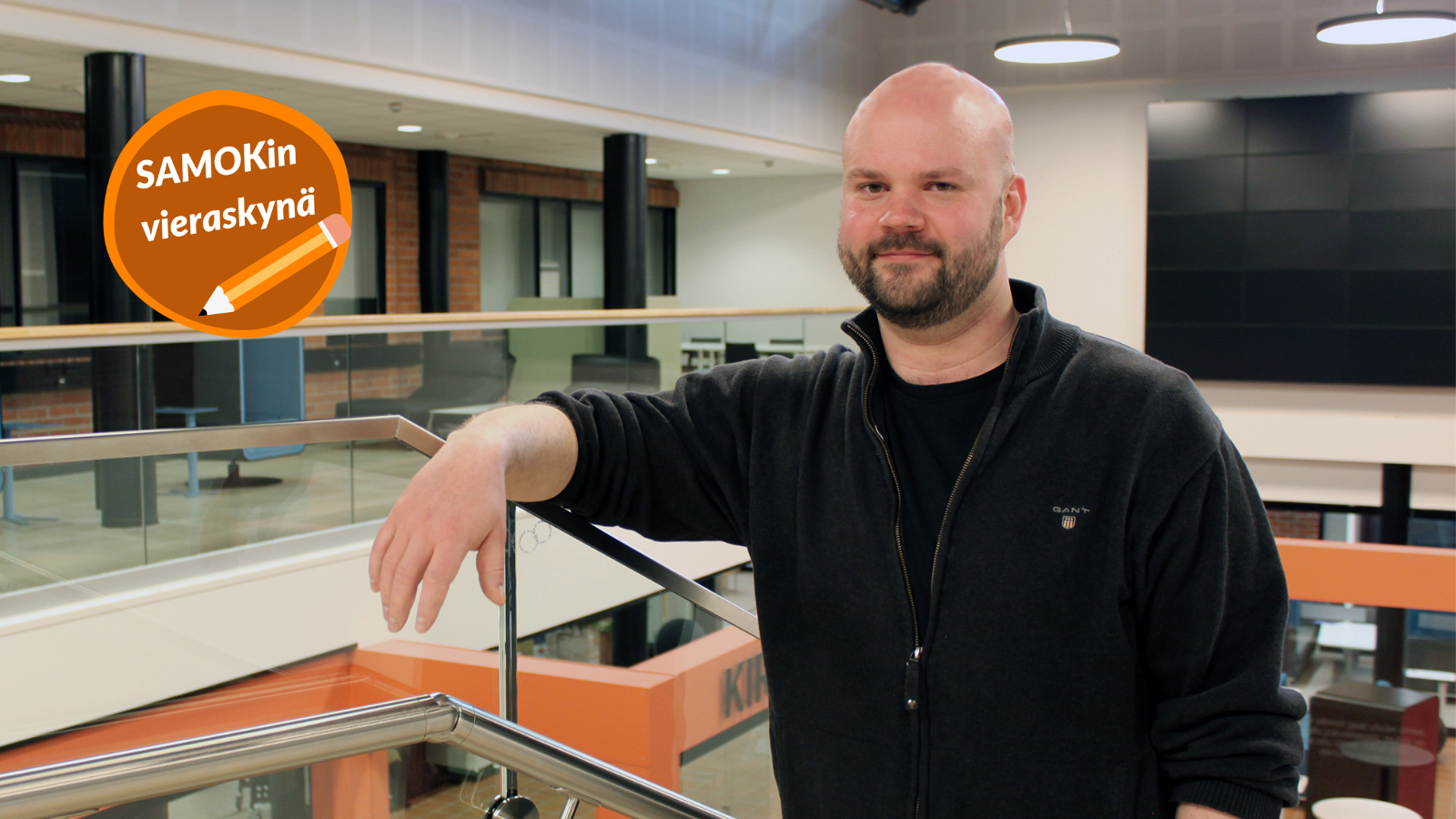
The author of the blog is Teacher of the Year 2026 Jan Stenlund, Lecturer (Electrical engineering and automation & Mathematics and physics) at Lapland University of Applied Sciences.